Here’s something wild: Frisian color names sound more like English than Dutch does. And that’s not an accident.
Take the word for red. In Frisian, it’s “read.” In English, it’s “red.” In Dutch? “Rood.” The Frisian word literally looks like someone from the 1500s spelling English.
Blue is “blau” in Frisian. English speakers see that and immediately get it. Dutch speakers see “blauw” and also get it. We’re all in the same Germanic family here, but Frisian and English are clearly sitting closer at the reunion table.
Black is where it gets really obvious. Frisian says “swart.” Old English said “swart” too. Modern English cleaned it up to “black,” but we kept “swarthy” to describe dark complexions. Dutch went with “zwart.” Again, Frisian and English are basically holding hands.
White? That’s “wyt” in Frisian. The spelling looks weird until you say it out loud. Then it’s just “white” with a Frisian accent.
Here’s where the landscape sneaks into the language. Frisian has “grize” for gray, which makes sense for a province where the sky spends half the year looking like a wet blanket. The North Sea doesn’t do bright blue very often.
Green is “grien,” yellow is “giel,” and brown is “brún.” You can practically hear the family resemblance with English in every one of them.
But Frisian doesn’t just copy English color words and call it a day. The language does something clever with combinations.
“Himmelsblauw” means sky-blue. Literally “heaven-blue.” Because apparently Frisians looked up on one of those rare sunny days and decided that exact shade needed its own word.
“Seegrien” is sea-green. Which makes perfect sense when you live in a province that’s basically a land-sea hybrid.
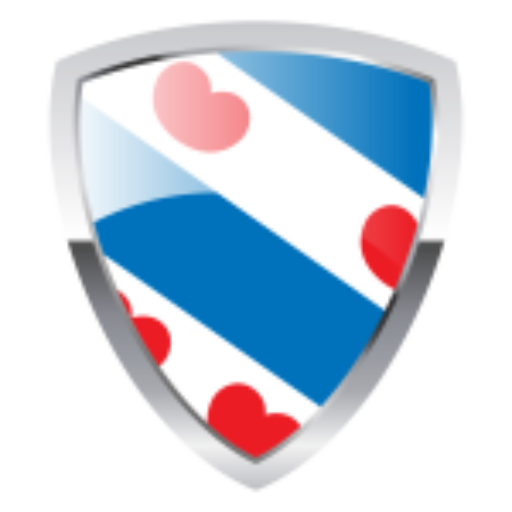
The Frisian flag tells its own color story. It’s blue and white with red “pompeblêden.” Those are water lily leaves, or technically the heart-shaped seed pods. They’re scattered across the flag like someone threw confetti and it froze mid-air.
Blue for the water. White for the sky (or the foam on the waves, depending on who you ask). Red for the hearts of the Frisian people. It’s poetic and practical at the same time.
Traditional Frisian clothing loved these colors too. The fancy costumes you see in museums are heavy on deep blues, bright reds, and crisp whites. Black showed up for formal occasions. Farmers wore brown because, well, mud.
Color idioms in Frisian are surprisingly similar to English ones too. “Griene fingers” means green fingers (or green thumb if you’re American). Same metaphor, same meaning. Someone who’s good with plants.
“Read fan woede” means red with anger. English does the exact same thing. Turns out humans across the North Sea all noticed that angry people’s faces turn the same color.
There’s “wyt as snie” (white as snow) for something really pale. Again, identical to English. The shared Germanic roots are showing.
But here’s a fun one: “blau fan de kou” means blue from the cold. English speakers would say purple or blue, so we’re on the same wavelength. Dutch says “blauw van de kou” too. Everyone agrees that freezing makes you turn blue.
Frisian pottery and tiles loved blue and white combinations. Delftware gets all the attention, but Frisian craftspeople were painting blue patterns on white ceramics just as enthusiastically. The color scheme was practical. Blue pigment (cobalt oxide) was relatively affordable and didn’t fade.
Modern Frisian keeps inventing new color terms, just like every living language. “Roze” for pink came from French through Dutch. “Pears” for purple probably came through Dutch too (“paars”). Languages borrow color words all the time.
But those core colors? The everyday words for the sky, the grass, the water, the mud? Those stayed Frisian. And they stayed remarkably close to English.
It’s one more piece of evidence that Frisian and English were neighbors once. Close neighbors who talked about the same gray skies, the same blue seas, and the same green fields.
The words remember, even if most people forgot.